An example from hydrogeophysics
hydro - geo - physics
Introduction
In GEOL 4420 the animating theme is to understand how subsurface geologic structure affects groundwater resources1. This is, broadly speaking, hydrogeology. To address this, we will us geophysical methods. This is, broadly speaking, hydrogeophysics.
In terms of applied geophysics, the traditional area of application was/is energy exploration (hydrocarbons, natural gas) and mineral exploration. This remains true. However, new areas of application for applied geophysics have opened up, including an increasing focus on groundwater resources2. Here is a podcast from the Society of Exploration Geophysicists regarding groundwater: Episode 295: Why Geophysicists Are Paying More Attention to Groundwater. Give it a listen.
Water Resources Research: Volume 51, Issue 6
The image below comes from the article The emergence of hydrogeophysics for improved understanding of subsurface processes over multiple scales, in this issue of Water Resources Research.
What does this image tell us? In this case the color image on the left side is of estimated subsurface electrical resistivity structure.
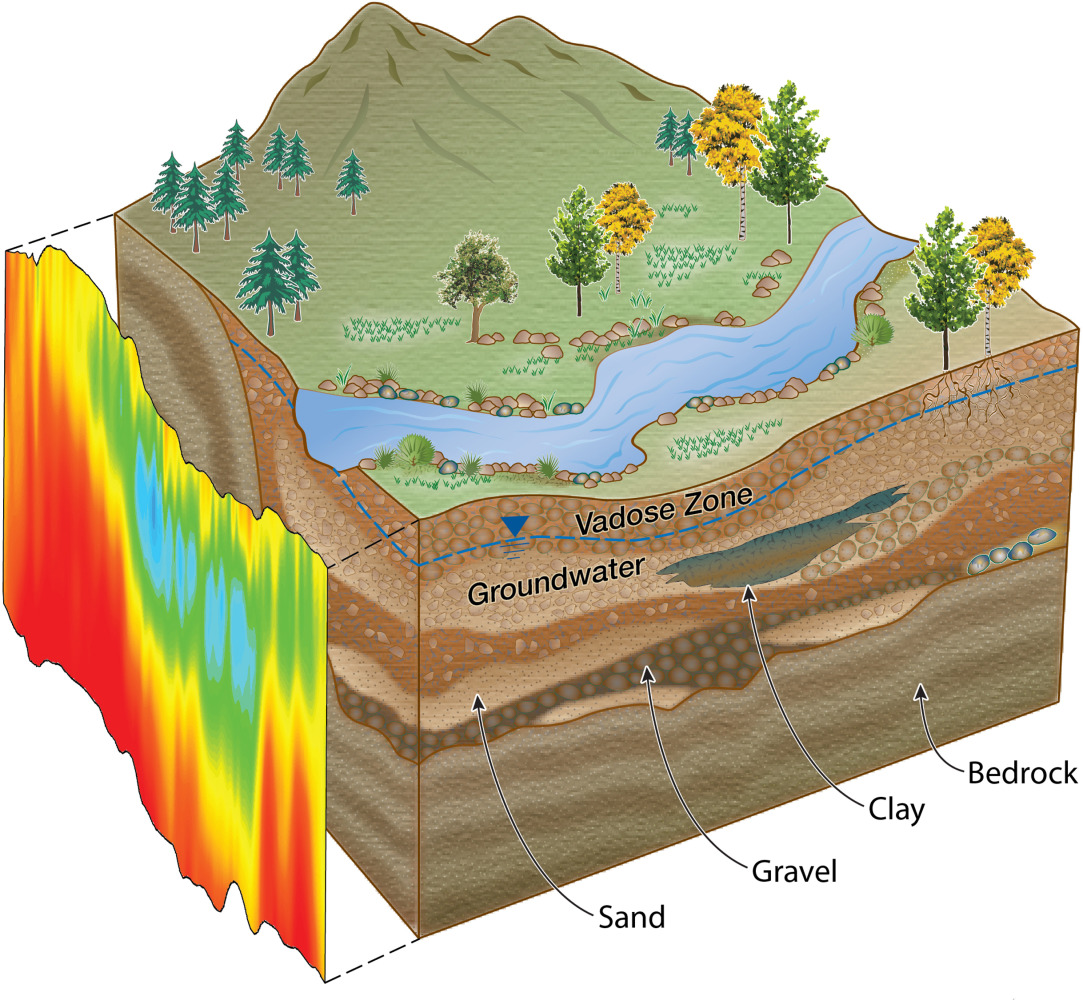
What can we say about how the method of electrical resistivity "illuminates" the subsurface geologic structure of this aquifer system?
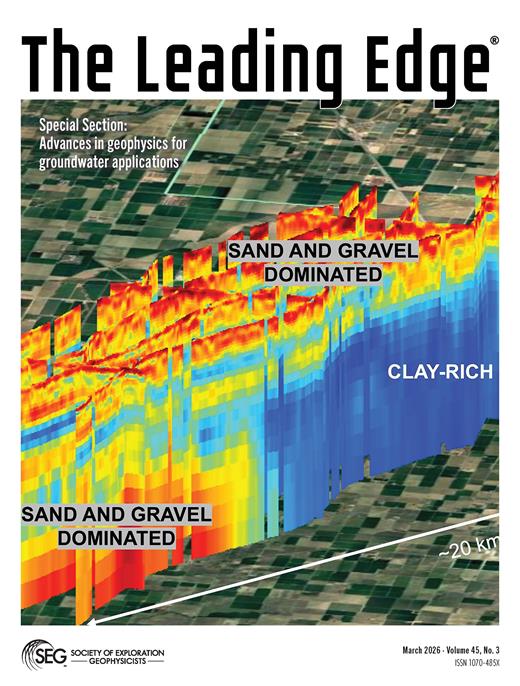
The Leading Edge (Vol 45 No 3 - 2026)
Full issue Volume 45 Issue 3 | The Leading Edge)
Groundwater and Geophysics in California - A Bay Area Geophysical Society panel discussion.
Back to the GEOL 420 Homepage