Gospel Guidebook: Getting and Keeping It Right  한국어 日本語
Equivalent Meaning of "Believe" Expressions
by Robert P. TerryUpdated May 9, 2026
In this article, I will attempt to show that the biblical phrases "to believe" (πιστεύειν), "to believe that" (πιστεύειν ὅτι), and "to believe in" (πιστεύειν εἰς) are equivalent expressions that mean to be persuaded that a proposition is true, or in the case of a person, to be persuaded that the propositions advanced by the person are true. I will do this by examining the biblical data, especially in the Gospel of John and the First Epistle of John. This is important because there are many theologians who are teaching that "to believe in" (πιστεύειν εἰς) has a more profound meaning than "to believe" (πιστεύειν) and "to believe that" (πιστεύειν ὅτι) in salvific passages, such as John 3:16. This assertion allows them to equivocate as to the meaning of belief and introduce a mystical and elusive "saving faith" (see my article Belief or Trust?).
(UPDATE: Several months after writing this article, I learned that the Rudolf Bultmann came to a similar conclusion regarding these phrases on page 203 of Volume 6 of the Theological Dictionary of the New Testament. He wrote, "Particularly distinctive is the common πιστεύειν εἰς (→ II, 432, 31 ff.) in the sense "to believe in," which is neither Gk. nor LXX.220 This can hardly be regarded as a development of πιστεύειν c. dat. == "to trust." On the contrary, πιστεύειν c. dat. is used more after the analogy of πιστεύειν εἰς for "to believe in." The fact that πιστεύειν εἰς is equivalent to πιστεύειν ὅτι shows rather that πιστεύειν εἰς arises out of the use of πιστεύειν for "to regard as credible, as true." πιστεύειν εἰς Χριστὸν Ἰησοῦν (Gl. 2:16), εἰς αὐτόν and εἰς ἐμέ (often in Jn.) etc. simply means πιστεύειν ὅτι Ἰησοῦς ἀπέθανεν καὶ ἀνέστη … (1 Th. 4:14; cf. R. 10:9) or ὅτι Ἰησοῦς ἐστιν ὁ χριστός (Jn. 20:31) etc. In Jn. esp. πιστεύειν εἰς and πιστεύειν ὅτι are constantly used interchangeably in the same sense." END)
As an initial observation, we see that πιστεύειν + a noun in the dative case (e.g., to believe him) parallels πιστεύειν + the preposition εἰς + the noun in the accusative case (e.g., to believe in him) in John 6:29-30 and John 8:30-31. In contrast, we see the reverse in John 14:11-12 and Romans 4:3-5.
John 6:29-30 ἀπεκρίθη ὁ Ἰησοῦς καὶ εἶπεν αὐτοῖς, Τοῦτό ἐστι τὸ ἔργον τοῦ Θεοῦ, ἵνα πιστεύσητε εἰς ὃν ἀπέστειλεν ἐκεῖνος (you believe in him whom he has sent). εἶπον οὖν αὐτῷ, Τί οὖν ποιεῖς σὺ σημεῖον, ἵνα ἴδωμεν καὶ πιστεύσωμέν σοι (we may believe you); τί ἐργάζῃ;
John 8:30-31 ταῦτα αὐτοῦ λαλοῦντος πολλοὶ ἐπίστευσαν εἰς αὐτόν (they believed in him). Ἔλεγεν οὖν ὁ Ἰησοῦς πρὸς τοὺς πεπιστευκότας αὐτῷ (them having believed him) Ἰουδαίους, Ἐὰν ὑμεῖς μείνητε ἐν τῷ λόγῳ τῷ ἐμῷ, ἀληθῶς μαθηταί μου ἐστέ·
John 14:11-12 πιστεύετέ μοι (believe me) ὅτι ἐγὼ ἐν τῷ πατρί, καὶ ὁ πατὴρ ἐν ἐμοί· εἰ δὲ μή, διὰ τὰ ἔργα αὐτὰ πιστεύετέ μοι (believe me). ἀμὴν ἀμὴν λέγω ὑμῖν, ὁ πιστεύων εἰς ἐμέ (the one who believes in me), τὰ ἔργα ἃ ἐγὼ ποιῶ κἀκεῖνος ποιήσει, καὶ μείζονα τούτων ποιήσει· ὅτι ἐγὼ πρὸς τὸν πατέρα μου πορεύομαι.
Romans 4:3-5 τί γὰρ ἡ γραφὴ λέγει; Ἐπίστευσε δὲ Ἀβραὰμ τῷ Θεῷ (he believed God), καὶ ἐλογίσθη αὐτῷ εἰς δικαιοσύνην. τῷ δὲ ἐργαζομένῳ ὁ μισθὸς οὐ λογίζεται κατὰ χάριν, ἀλλὰ κατὰ τὸ ὀφείλημα. τῷ δὲ μὴ ἐργαζομένῳ, πιστεύοντι δὲ ἐπὶ τὸν δικαιοῦντα τὸν ἀσεβῆ (the one who believes on the one justifying the ungodly), λογίζεται ἡ πίστις αὐτοῦ εἰς δικαιοσύνην.
More importantly, in 1 John 5:10, we see that πιστεύειν + a noun in the dative case (e.g., to believe him) is equivalent to πιστεύειν + the preposition εἰς + the noun in the accusative case (e.g., to believe in him), but then we immediately see the reverse where the latter is equivalent to the former. Later on in this article, we will see that this verse is basically a proof-text for my assertion regarding πιστεύειν + the preposition εἰς + the noun in the accusative case (e.g., to believe in him) paralleling πιστεύειν + a noun in the dative case (e.g., to believe him).
1 John 5:10 ὁ πιστεύων εἰς τὸν υἱὸν τοῦ Θεοῦ (the one who believes in the Son of God) ἔχει τὴν μαρτυρίαν ἐν ἑαυτῷ· ὁ μὴ πιστεύων τῷ Θεῷ (the one who does not believe God), ψεύστην πεποίηκεν αὐτόν, ὅτι οὐ πεπίστευκεν εἰς τὴν μαρτυρίαν (the one who has not believed in the testimony), ἣν μεμαρτύρηκεν ὁ Θεὸς περὶ τοῦ υἱοῦ αὐτοῦ.
In addition to the above, we also see that the usage in John 6:47 parallels that in John 5:24.
John 5:24 ἀμὴν ἀμὴν λέγω ὑμῖν ὅτι ὁ τὸν λόγον μου ἀκούων, καὶ πιστεύων τῷ πέμψαντί με, ἔχει ζωὴν αἰώνιον·(the one who believes the one who sent me has eternal life) καὶ εἰς κρίσιν οὐκ ἔρχεται, ἀλλὰ μεταβέβηκεν ἐκ τοῦ θανάτου εἰς τὴν ζωήν.
John 6:47 ἀμὴν ἀμὴν λέγω ὑμῖν, ὁ πιστεύων εἰς ἐμὲ, ἔχει ζωὴν αἰώνιον. (the one who believes in me has eternal life)
In contrast with Classical Greek, Koine Greek uses "prepositions with a particular case" (e.g., verb πιστεύειν + preposition εἰς + accusative noun αὐτὸν, meaning "to believe in him") more frequently than "cases without a preposition" (e.g. verb πιστεύειν + dative noun αὐτῷ, meaning "to believe him") in order to improve explicitness and convey subtle nuances. According to Daniel B. Wallace on page 164 of The Basics of New Testament Syntax, "Therefore, the use of a particular preposition with a particular case never exactly parallels—either in category possibilities or in relative frequency of nuances—the use of a case without a preposition" (italics and bold text are Wallace's). However, in saying this, Wallace is speaking of the whole semantic range of "a particular preposition with a particular case" versus "a case without a preposition." This is clear from the chart he shows immediately under this statement. Here is the chart:
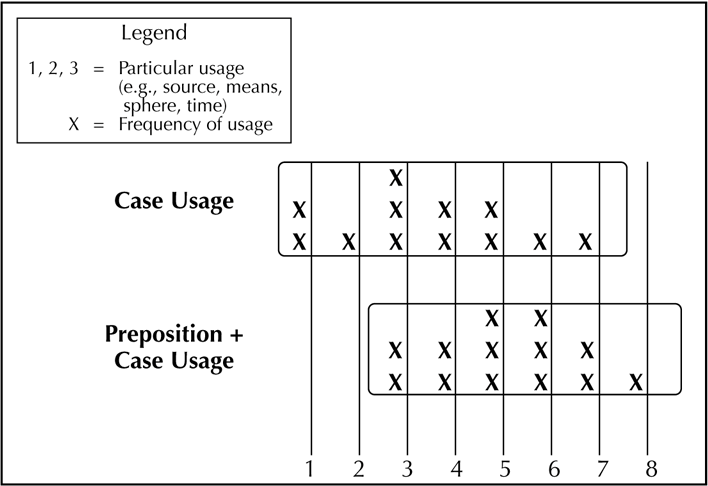
According to Wallace's chart, we see that although the entire semantic range never exactly parallels each other, specific use cases do parallel each other.
In terms of what I said above about interpreting ὁ πιστεύων εἰς αὐτὸν (the one who believes in him) in a verse such as John 3:15 as "the one who believes Him," I think it is important to think this through logically. Even if ὁ πιστεύων εἰς αὐτὸν (the one who believes in him) parallels ὁ πιστεύων αὐτῷ (the one who believes him) in some passages, such as John 3:15, that doesn't mean that ὁ πιστεύων εἰς αὐτὸν (the one who believes in him) necessarily means or always means ὁ πιστεύων αὐτῷ (the one who believes him). It is simply a possibility. However, the opposite is also a possibility, namely, that ὁ πιστεύων αὐτῷ (the one who believes him) could mean ὁ πιστεύων εἰς αὐτὸν (the one who believes in him). Finally, it is possible that ὁ πιστεύων εἰς αὐτὸν (the one who believes in him) and ὁ πιστεύων αὐτῷ (the one who believes him) are not parallel at all. In such a case, their meanings are distinct and cover different semantic ground. I mention all of this as a disclaimer. Having said that, however, I do believe there is evidence that ὁ πιστεύων εἰς αὐτὸν (the one who believes in him) parallels ὁ πιστεύων αὐτῷ (the one who believes him).
In a couple of my previous articles, I pointed out that the meaning of "believe" is explained to us in the context of John 3:15. More precisely, in John 3:11-12, we read, Truly, truly, I say to you, we speak that which we know, and bear witness of that which we have seen; and you do not receive our witness. If I told you earthly things and you do not believe, how shall you believe if I tell you heavenly things? In this passage, we clearly see that "to believe" is equivalent to "receiving witness." In addition to John 3:11-12, we have a few other passages that convey this same meaning of "believe," including John 3:32-33 (in the context of John 3:36), John 12:47-48, and 1 John 5:9-10.
Let's now take a look at 1 John 5:9-10 because I think this passage is highly relevant to this discussion. In those verses in Young's Literal Version, we read, "9 If the testimony of men we receive, the testimony of God is greater, because this is the testimony of God that He hath testified concerning His Son. 10 He who is believing in the Son of God, hath the testimony in himself; he who is not believing God, a liar hath made Him, because he hath not believed in the testimony that God hath testified concerning His Son;" (I underlined the relevant parts.)
For starters, in 1 John 5:9 we see that the main issue at hand is receiving God's testimony. John compares receiving God's testimony to receiving a man's testimony. They entail the same passive act of accepting a proposition as being true, with the exception that God's testimony is much more authoritative. In 1 John 5:10, we see that "believing in the Son of God" equates to "having the testimony in oneself" (i.e., believing in Jesus equates to receiving His testimony as being true into one's mind). This observation alone provides evidence for my assertion. However, we have even greater evidence for it if we keep reading 1 John 5:10. What we find is that "believing God" (without the preposition) parallels "believing in the Son of God" (with the preposition), but then that "believing in the testimony" parallels "believing God." What is especially important here is that "believing in the testimony" follows the exact pattern of πιστεύειν + the preposition εἰς + a noun in the accusative case. It is important to notice that "believing in testimony" with the preposition is semantically the same as "believing testimony" without the preposition, and that, according to the Apostle John, "believing in the testimony" is the same as "believing God," which is the same as "believing in the Son of God."